The Mobile App Development Process, Start to Finish / Jun 14, 2026

Building a mobile app is rarely the hard part. The hard part is everything around the code: deciding what to build, for whom, and how to keep it alive after launch. A clear process turns a vague idea into something people actually keep on their home screen. Here is the flow I follow, stage by stage.
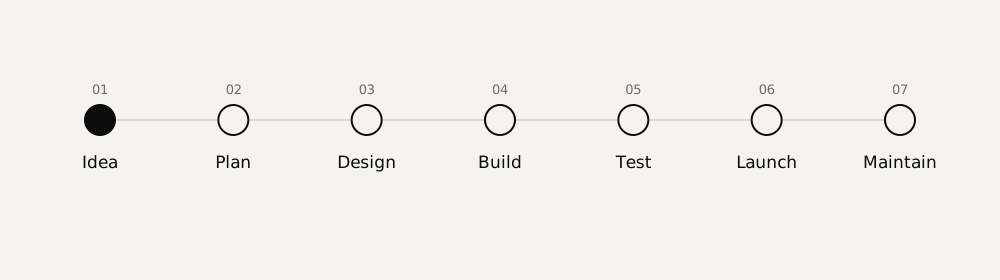
1. Start with the problem, not the app
Every app begins as an idea, but the useful question is which problem it solves and for whom. Define the audience, study how they behave, and write a single sentence that explains why your app deserves space on someone's phone. Look hard at the competition and at the gaps they leave open. This is also where you validate the concept before spending real money, because personalization and relevance are now what people quietly expect rather than a bonus.
2. Plan the build before you build
Turn the validated idea into requirements, milestones, and a realistic timeline. The biggest early decision is the technology approach:
- Native, using Swift for iOS and Kotlin for Android, when you want maximum performance and deep access to device features.
- Cross platform, using frameworks like React Native, when a single codebase across both platforms saves time and cost.
- Progressive web apps, when you want reach without an app store install.
Weigh performance, budget, security, and how much you are willing to spend keeping it healthy later.
3. Design for the first five minutes
Wireframes, user flows, and clickable prototypes let you test the experience before a line of production code exists. Fixing a confusing flow in a prototype costs minutes. Fixing it after launch costs a release. Build accessibility in from the start rather than bolting it on, so the app works for everyone who reaches for it.
4. Build in thin slices
Frontend handles what people see and touch. Backend handles the servers, databases, and APIs working behind the scenes. Most modern apps also need authentication, push notifications, payments, and analytics. An agile rhythm of small, frequent releases beats a single big launch, and a minimum viable product gets core value into real hands early so you learn from actual usage instead of guesses.
5. Test the way users will
Functional testing confirms features work. Performance testing checks speed and stability under load. Security testing hunts for the holes that leak user data. And real user testing tells you whether the thing is actually pleasant to use, which no automated suite can measure for you.
6. Launch is a checklist, not a moment
Publishing to the App Store and Google Play means screenshots, descriptions, keywords, a privacy policy, and compliance with each store's review rules. App store optimization, which is the app world's version of SEO, often decides whether anyone ever finds you.
7. Maintenance is the real product
Shipping is the start line, not the finish. Bug fixes, operating system updates, performance monitoring, and steady improvements based on feedback are what keep an app relevant as devices and expectations move on.
The teams that win are not the ones that write code fastest. They are the ones that treat the whole loop, from research to maintenance, as the product.